

Do you have enough savings to provide an income for 40 years?
For most mums in business (me being one of them!), the answer is almost certainly a big fat “heck no!”.
According to the Office of National Statistics, someone currently in their 40s has a 25% chance of living until they’re 100, with more of us projected to live well into our 90s. As women tend to live longer than men, there’s a fair chance that might well be us getting letters from the future king.
The downside is that whatever we’ve saved for our retirements (or not!) may well need to provide us with an income for another 30-40 years if we want to stop working when we’re still fit and young enough to have some fun.
Does this sound familiar?
1. As a mum, regardless of how old your kids are, there’s a fair chance that you have a heck of a lot of things to spend your money now and for the foreseeable future.
2. Being self-employed, your income can be erratic and difficult to predict.
3. Due to a combination of 1 and 2, you probably have very little time or energy to think about your lifestyle in the next 20/30/40 years time when there’s so much to deal with now.
4. One of the downsides of being self-employed is that there’s no employer to nudge us into a pension scheme, so we have to proactively add planning for decades in the future to our To Do List now.
What the expert said…
 Every now and then I receive letters about my various pensions from my old employed days, give the figures a cursory skim, ignore the words because they look like they’ll probably be boring and file them never to see the light of day again. But I have to say I’m not keen on on the idea of living on cabbage soup and sleeping in a cardboard box for decades so it’s probably time I took a bit of control of the situation.
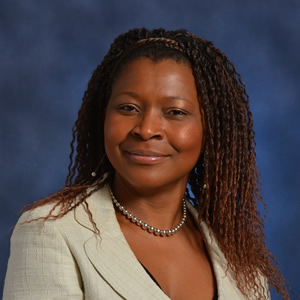
So I asked one of our members Kadi Wyke, who is a chartered financial advisor and pensions specialist at St James Place, to come along and talk to us and financial planning at our Tunbridge Wells meet-up earlier this week.
Pensions are obviously complicated and all of us have specific circumstances which need tailored advice. I am most definitely NOT a pensions expert (which you’ve probably already gathered), but here’s my take on Kadi’s talk with some food for thought and basic tips about where to start with the heady excitement of planning for your twilight years.
1. To maintain a good standard of living most people need 80% of their current income in retirement
Hopefully by then the mortgage will be a distant memory and the kids will have flown the nest and finished university, but in retirement you’ll have more time on your hands and that often involves spending money if you plan to e.g. travel, pursue hobbies or buy a yellow Lamborghini.
If you’d like to get an idea of what you might need, the government’s Money Advice Service website gives guidance (NB “guidance” and “advice” are completely different). This should help as a first step towards understanding what income a certain level of contribution would derive.
2. What you’ll get from your state pension
You need 35 years of full National Insurance Contributions to get a full state pension (currently £168.60 a week equating to £8797.31 per year). If you have less than 35 years of NI contributions then you will get less than that.
State pensions are payable after the Normal Retirement Age. For people born after 1960 that age is currently 67, but there’s a good chance that may increase.
If you have a child under age 12 living at home your NI contributions can be waived for that period if you are not earning above the minimum threshold (currently £8,424) and paying them via your self-assessment/employer. If you receive child benefit then this waiver is automatically applied, but if not, you can contact the Department of Work and Pensions to request it.
3. How to check your National Insurance record and state pension projection
HMRC has an online service where you can get a full breakdown of how many years you’ve paid NI for and what your state pension would be based on your contributions to date. Click here to visit their service.
4. Your personal pension and what income it might provide
As a rule of thumb a retirement fund of £1 million (yes you read that right!) on a typical 4% income would provide you with an income of £40,000-ish per year. A pot of £100,000 would provide £4,000-ish per year. Obviously there are lots of variables caused by the type of pension, how investments perform and the way in which you ultimately take your pension, but variables aside this very clearly illustrates that we’re going to need a big old pension pot to keep us going in a comfortable manner.
5. Why you should save for your retirement NOW
If, let’s call her Sarah, starts putting £100 per month into her pension when she’s 20, but Laura doesn’t start paying into a pension until she’s 40, to achieve the same level of savings by retirement Laura would need to pay £400 per month instead of Sarah’s £100 (figures very approximate obviously!). That’s because not only did Laura not start building up her savings, but she’s also lost 20 years of potential for investment growth on her pension fund.
Personally I’d find it much easier to save £100 a month than £400, so it’s almost certainly a good idea to start now if you haven’t already!
6. How often should you review your pension arrangements (while you’re still saving)
Every year review, with a qualified financial advisor because all sorts of things can change, both in your personal and family circumstances and in wider things that could affect investments.
7. Get professional help
Before you make ANY changes to existing pensions or take out a personal one, get help from a professional, in the same way you would ask a lawyer for legal advice and an accountant for tax advice. Pensions are too important to DIY it.
Summary
Even from an unqualified lay[wo]man’s perspective, Kadi’s talk left me in no uncertainty that I need to do something about my pension arrangements and that pretty quickly at that. So if you’re in any doubt as to whether you have planned adequately, speak to someone who can help you (unless you’re dreaming of cabbage soup every day for 40 years).
Kadi’s website is https://www.kadiwyke.co.uk/ or you can find an independent financial advisor on the FCA’s register.
And finally…
If you’d like to receive invitations to our events and receive the occasional email with news and event tips, click here to sign up to hear from us.
By for now!
Claire